Best IPTV Services 2026:
A Complete Buyer's Guide
The IPTV market in 2026 is larger and more competitive than ever — which is good news for viewers, but makes choosing the right provider genuinely challenging. This guide walks through everything that distinguishes a reliable IPTV service from one that will disappoint you the moment it matters most.
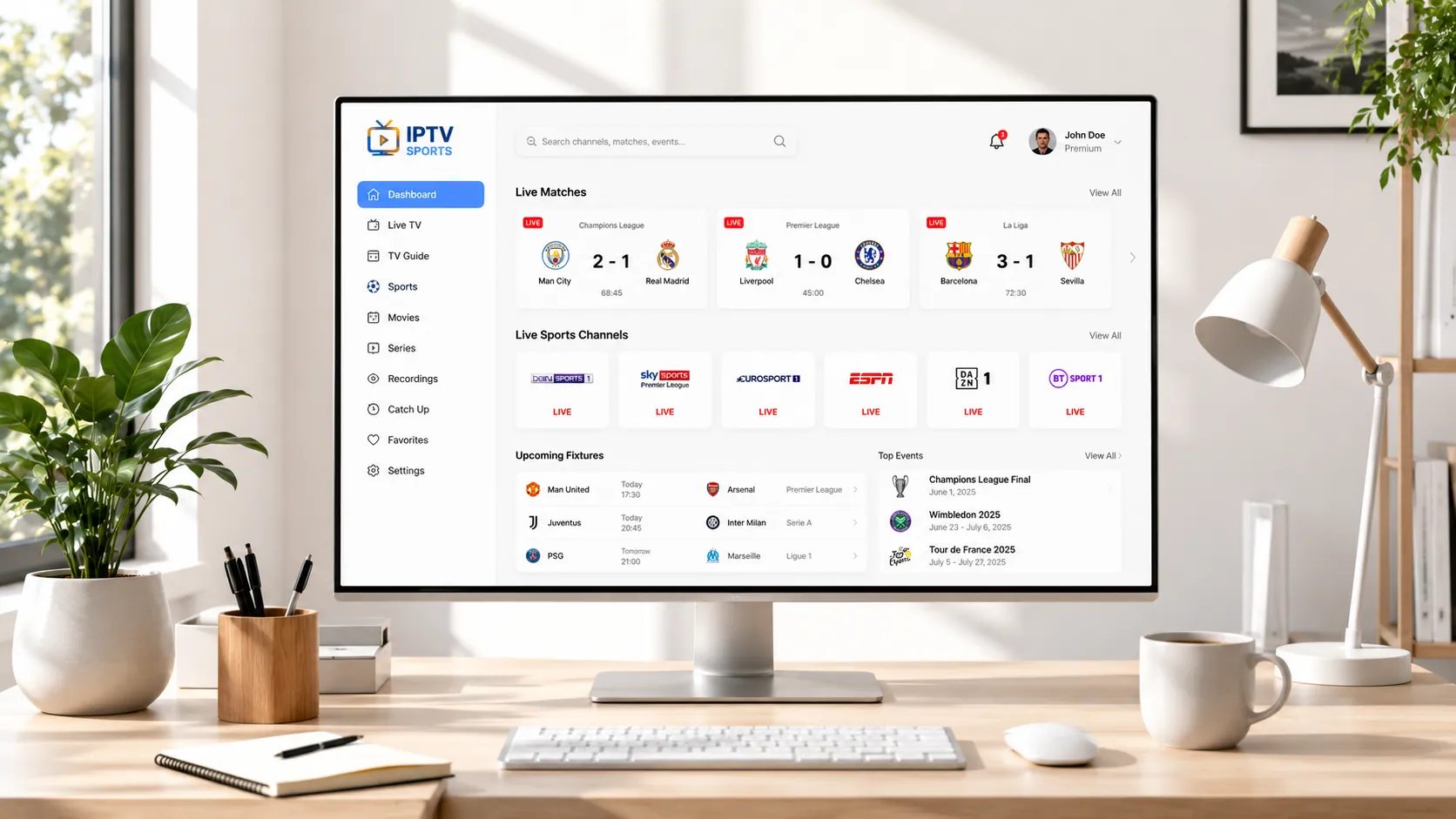
What separates a good IPTV service from a great one
When people search for the best IPTV services, they are usually looking for one thing: a provider they can rely on to deliver a stable, high-quality stream whenever they want to watch. That sounds simple, but in practice the gap between an average IPTV streaming service and a genuinely good one is significant — and it shows up most clearly at the worst possible moment, like five minutes before a major live sports event.
Internet Protocol Television works by delivering television content over your broadband connection rather than via a physical cable or satellite signal. This gives it enormous flexibility: you can watch on a Smart TV, an Amazon Firestick, an Android box, a tablet, a smartphone, or a computer — often on the same subscription. The technology itself is well established and capable of delivering excellent picture quality. The challenge is not the technology; it is the infrastructure and the people running it.
A reputable IPTV provider invests in server infrastructure that can handle peak-demand periods, maintains a stable channel lineup without constant interruptions, and provides actual customer support when something goes wrong. A less reputable provider offers low prices but unpredictable performance, disappears when there are problems, and may vanish entirely with no warning. Choosing between them requires understanding what to look for — and that is exactly what this guide covers.
The IPTV streaming landscape in 2026 has matured considerably compared to a few years ago. There are more legitimate, well-run services available than ever before. There are also more operations that look professional on the surface but deliver a poor experience. This guide gives you the tools to tell the difference. We cover the evaluation criteria that experienced IPTV users consistently point to, the mistakes that first-time subscribers commonly make, and the questions you should ask any provider before handing over payment details.
This page is the central resource in FlixIPTV8K's IPTV services guide. The supporting articles linked throughout go deeper on specific topics — device setup, subscription pricing, channel selection, legality, and more — so you can explore whatever aspect is most relevant to your situation.
What IPTV actually is — and how it delivers your television
Understanding how IPTV works technically is useful context for evaluating providers and troubleshooting issues. Here is a clear, non-technical explanation.
Television delivered as data packets over your internet connection
Traditional television broadcasting sends signals via radio waves (for aerial TV), physical coaxial cable (for cable TV), or radio signals bounced off a satellite (for satellite TV). Your set-top box or television decodes these signals into the video you see on screen.
IPTV takes a fundamentally different approach. The television content is encoded as digital data, compressed, and transmitted over the internet using the same protocols that deliver web pages, email, and video calls. Your IPTV application receives this data stream, decodes it, and plays it back on your screen in real time. From your perspective as a viewer, the result looks identical to any other form of television — except it arrives through your broadband router rather than a physical cable or dish.
This architectural difference is what gives IPTV its device flexibility. Any internet-connected device that runs an IPTV application can receive the stream — which is why the same subscription can serve a Samsung Smart TV, an Amazon Firestick, an iPhone, and a Windows laptop. The content goes to whichever device is connected and authenticated.
The standard that underpins most IPTV delivery is HLS (HTTP Live Streaming), originally developed by Apple. The Internet Engineering Task Force (IETF) publishes the full specification as RFC 8216 — the open standard that the majority of modern IPTV services use to deliver streams reliably across devices and network conditions.
- Delivered over your existing broadband — no new cables or dishes
- Works on any internet-connected device running a compatible IPTV app
- Uses the widely-adopted HLS streaming standard for broad device support
- Supports live TV, on-demand libraries, and catch-up content
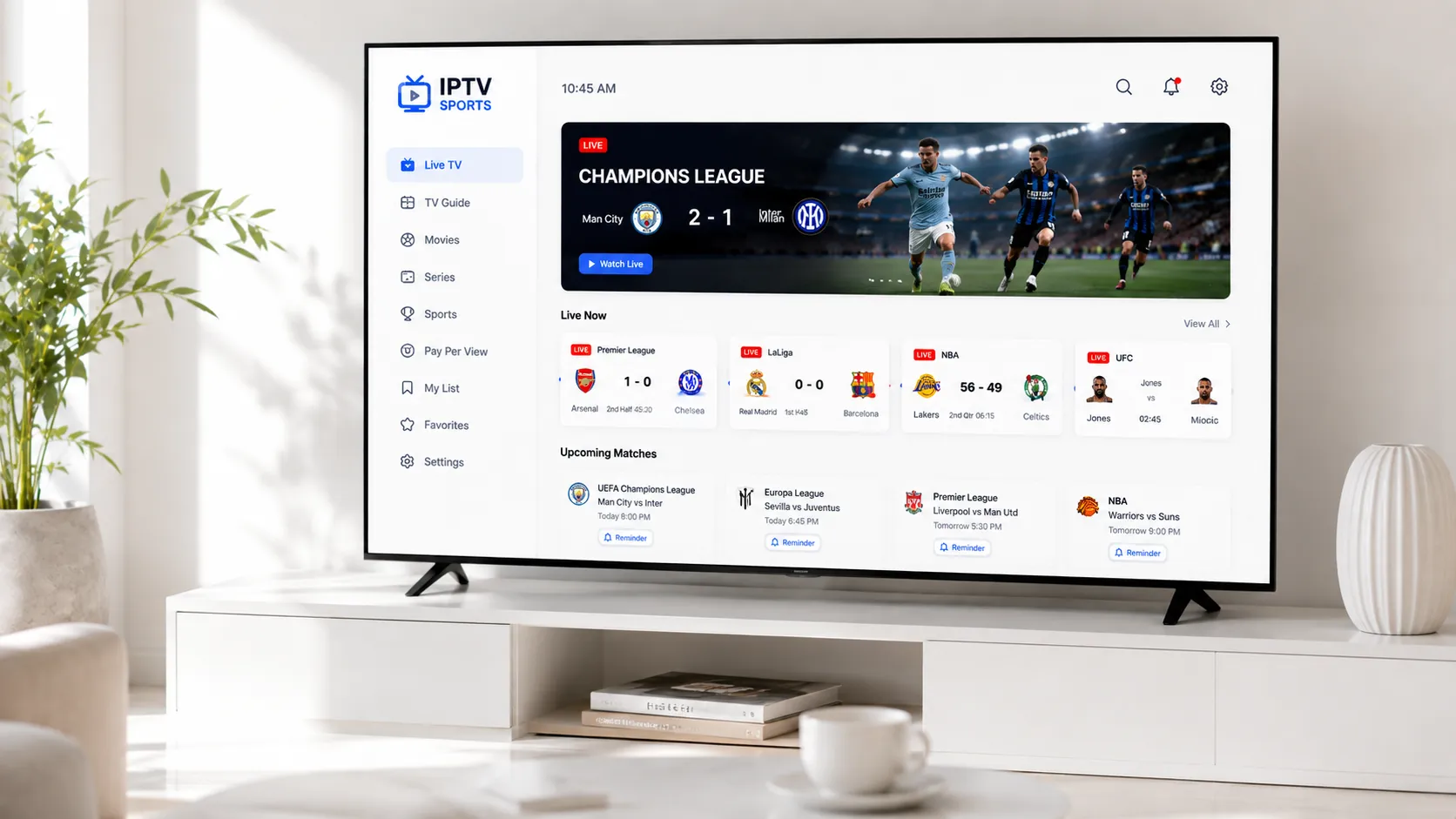
Eight criteria for evaluating any IPTV service
Before subscribing to any IPTV streaming service, these are the questions worth asking. Apply them to any provider you are considering.
Stream stability during peak demand
An IPTV service that works fine at 2pm on a Tuesday and fails during a major live match or season finale is not a reliable service. Ask whether the provider's infrastructure is built to handle simultaneous high-demand moments, and look for any community feedback about performance during popular events before subscribing.
Channel lineup relevance
A channel count on its own means little. What matters is whether the specific channels your household watches are present and reliable. For US viewers this typically means major sports networks, national news channels, and entertainment networks. For UK viewers, British programming and international football coverage are priorities. Ask about specific channels before subscribing.
Video quality options
The best IPTV providers offer streams in multiple quality tiers — from standard definition for lower bandwidth connections up to HD and, for select channels, 4K. Verify that the quality levels advertised are consistently delivered, not just achievable in ideal conditions. Ask whether quality is adaptive based on your connection speed.
Device compatibility breadth
The IPTV service you choose should work on the specific devices your household uses. Confirm compatibility explicitly rather than assuming. Smart TV compatibility varies by manufacturer and model. Our dedicated guides on IPTV for Smart TV and IPTV for Firestick cover the most common setups in detail.
Simultaneous connection limit
Many households need to stream on more than one device at a time. Check the connection limit on any subscription plan you are considering. A family household with a TV in the lounge, a bedroom TV, and multiple smartphones will have very different needs to a single viewer. This is one of the most important factors to clarify before subscribing.
Support quality and responsiveness
Test customer support before you subscribe — ask a technical question and see how quickly and helpfully they respond. A provider who is accessible, knowledgeable, and honest before you pay is more likely to be the same after. FlixIPTV8K provides support directly via WhatsApp, available for both pre-sales questions and subscriber assistance.
Subscription pricing transparency
Understand exactly what you are getting for the price — how many connections, which content types, what quality levels — and confirm there are no hidden renewal conditions. Our subscription plans guide explains what to look for in IPTV pricing structures and how to compare plans across providers.
Trial period availability
A provider confident in their service should be willing to let you test it before committing to a paid subscription. A trial period gives you the opportunity to verify that the stream is stable on your specific devices and connection before spending money. Ask about IPTV free trial options when speaking with any provider.
Why reliability is the defining quality of a top IPTV service
Every other feature in this guide is secondary to one question: does the service work consistently? Here is why reliability deserves its own section.
What makes an IPTV service stable — and what causes it to fail
IPTV service reliability is primarily determined by the provider's server infrastructure. A well-resourced provider runs multiple servers in different geographic locations, uses content delivery networks to reduce latency, and maintains redundancy so that if one server experiences issues, traffic is automatically routed to another. The result is a service that remains stable even when tens of thousands of subscribers are watching simultaneously.
An underfunded or poorly managed provider typically runs on minimal infrastructure that is adequate for low-traffic periods but collapses under load. This is why so many viewers report that their IPTV service "works fine normally" but buffers or fails precisely during a live NFL playoff game, a Champions League final, or the season premiere of a popular drama. These moments draw the highest concurrent viewing figures, which is exactly when inadequate infrastructure gives way under the demand.
As an IPTV subscriber evaluating reliability, there are practical indicators to look for. Ask the provider directly whether they have had significant outages in the past year and what steps they took to address the root cause. And test the service yourself during a busy period before committing to a longer subscription — the short-term cost of a trial is worth the performance data it provides.
- Server redundancy prevents single points of failure
- CDN distribution reduces buffering for geographically dispersed viewers
- Live sport and major events are the true test of any provider's infrastructure
- Transparent communication about issues signals a trustworthy provider
Have questions about IPTV service options?
The FlixIPTV8K team answers questions directly via WhatsApp — before you subscribe, while you set up, and if you run into any issues along the way.
Channel selection — what the best IPTV services carry
The quality of an IPTV service's channel lineup is not just about breadth. Relevance to your specific viewing habits matters far more than a headline number of channels.
Sports programming — the make-or-break category for most viewers
For the majority of IPTV subscribers in the USA and UK, live sports is the primary justification for their subscription. This makes the reliability of sports streams — not just their availability — the most important single factor in evaluating an IPTV service provider. An NFL playoff game that buffers every three minutes is worse than no stream at all, because it creates frustration at exactly the moment you most want to watch.
When evaluating a provider's sports coverage, ask specifically about the leagues and events that matter to you. In the USA this typically means NFL, NBA, MLB, NHL, and major boxing or MMA events. In the UK it means Premier League, Championship football, Champions League, F1, and major rugby and cricket. A provider who can give you specific, clear answers about these is demonstrably more reliable than one who responds only with vague reassurances about having "all channels."
Our dedicated guide to IPTV sports channels covers this topic in more depth, including what to look for in live sports streams and how to verify whether specific events are covered before you subscribe.
News, entertainment and the broader channel mix
Beyond sport, the best IPTV services maintain a stable lineup of national and international news channels, broad entertainment networks spanning different genres and demographics, movie channels, children's programming, and where relevant to the subscriber base, international channels for viewers with interests beyond English-language content.
On-demand (VOD) content has become increasingly important as part of IPTV subscriptions. Viewers expect to catch up on episodes they missed and to access a library of films without switching to a separate streaming service. The depth and freshness of the VOD library is worth asking about specifically — some IPTV services have large but poorly maintained VOD sections with significant amounts of outdated or non-functional content.
A good way to evaluate a provider's channel lineup honestly is to ask for a channel list before subscribing and to verify that the specific channels you watch are present and functional, rather than simply taking the provider's word for it. This is part of what a trial period is for. Visit our full channel guide for a more detailed breakdown of what a well-structured IPTV channel lineup should look like.
IPTV service compatibility — matching the provider to your devices
The best IPTV services work well across multiple device types — but "works on all devices" is a claim worth verifying in detail before you subscribe.
Smart TV
Samsung (Tizen OS), LG (webOS), and Android TV-based televisions each handle IPTV apps differently. Samsung and LG TVs may require specific apps from their respective stores depending on model year. Android TV sets generally have the widest app compatibility. Always confirm your specific model before subscribing. See our Smart TV IPTV guide for model-specific guidance.
Amazon Fire TV Stick
The Amazon Fire TV range — including the Firestick 4K and Fire TV Cube — is among the most popular IPTV platforms in the USA and UK. These devices support IPTV applications installed from the Amazon App Store or via the built-in downloader for sideloading. The Fire TV Stick 4K Max offers particularly strong performance for high-quality IPTV streams. Read our dedicated Firestick IPTV guide.
Android & iOS
Smartphones and tablets running Android or iOS are IPTV-ready platforms with a wide range of compatible applications available. Android devices have the broadest app selection since apps can be installed from multiple sources. iOS devices require apps available through the Apple App Store. Both platforms deliver good-quality IPTV streams over Wi-Fi or mobile data, though mobile data usage on cellular networks can be significant for HD streaming.
Windows & Mac Computers
Desktop and laptop computers offer multiple routes to IPTV access: dedicated desktop applications, browser-based players, or screen mirroring to a connected television. Computers generally have sufficient processing power for high-quality streams and benefit from the option of a wired Ethernet connection, which delivers more consistent performance than Wi-Fi for live broadcasting. VLC Media Player is a widely-used open-source option that supports IPTV playlist formats on both Windows and Mac.
Choosing the best IPTV service for USA and UK viewers
Viewers in the USA and UK have some specific requirements and considerations when evaluating top IPTV providers. Here is what matters most in each market.
What US viewers should prioritise
The American television market has historically been dominated by cable providers offering large bundled packages at significant monthly cost. IPTV represents an increasingly popular alternative for viewers who want more flexibility — but the US market's specific content priorities mean that not every international IPTV service is well-suited to American subscribers.
For US viewers, the most important considerations are: coverage of major American sports leagues (NFL, NBA, MLB, NHL), availability of local broadcast affiliate channels where possible, a strong selection of national cable news and entertainment networks, and server infrastructure with points of presence that minimise latency for US-based subscribers. Our dedicated guide to IPTV providers in the USA covers the US-specific landscape in more depth.
What UK viewers should prioritise
UK viewers evaluating IPTV services typically want access to British content alongside international sports coverage that goes beyond what standard broadcast television provides. The Premier League, Champions League, Test cricket, and Formula One are consistently among the most-requested content categories for UK IPTV subscribers.
UK subscribers should also consider the legality of the specific channels and content they are accessing. FlixIPTV8K takes this seriously — our guide to legal IPTV services covers the regulatory landscape in clear terms and explains what responsible IPTV use looks like for UK viewers specifically.
Worldwide English-speaking subscribers
Viewers in Canada, Australia, Ireland, South Africa, New Zealand, and other English-speaking markets often find that services built primarily for the US or UK market serve them well, since the content priorities are broadly aligned. However, specific local channels and regional sports coverage may not be available depending on the provider. If you are outside the USA or UK, it is worth asking a provider specifically about coverage for your region before subscribing — a good provider will give you an honest, direct answer.
How to choose your IPTV service in five steps
Apply this practical framework when evaluating any paid IPTV streaming service.
List your must-have channels
Write down the 10–15 specific channels your household watches regularly. These are your non-negotiables — confirm they are available before evaluating anything else.
Identify your devices
Note every device that will need to access the IPTV service, including make and model for Smart TVs. Confirm compatibility with each provider you consider.
Count simultaneous users
Establish how many screens your household might use at the same time. This determines the connection tier you need and significantly affects value for money across different plans.
Test before committing
Request a trial from any provider you are seriously considering. Test the service on your actual devices during a live event or prime-time period to assess real-world performance.
Evaluate the support
Contact the provider's support team before subscribing and judge how they respond. Speed, helpfulness, and honesty in pre-sales contact are reliable predictors of post-subscription treatment.
Six common mistakes when choosing an IPTV service
These are the errors that experienced IPTV subscribers consistently wish they had known about before their first subscription.
Choosing based on price alone
The cheapest IPTV subscription is rarely the best value. Extremely low pricing is almost always a signal of under-invested infrastructure. A service that buffers frequently, drops streams during live events, or disappears entirely after a few months has cost you more than a well-priced, reliable alternative — even if the monthly fee appeared lower. Evaluate on total value, not headline price.
Not verifying device compatibility before subscribing
Assuming that because a service "supports Smart TVs" it will work on your specific Samsung or LG model is a mistake many subscribers make. Smart TV IPTV compatibility varies significantly by manufacturer, operating system version, and model year. Always confirm your exact device model with the provider before purchasing a subscription — and get that confirmation in writing if possible.
Ignoring the simultaneous connection limit
A single-connection plan may appear sufficient until you realise that two members of your household want to watch different things simultaneously — at which point one of them gets disconnected mid-programme. Work out the maximum number of screens that might run concurrently in your household before choosing a subscription tier, and factor this into your comparison of different plans.
Not testing during a live event
Testing an IPTV service on a quiet Tuesday afternoon while watching a pre-recorded programme tells you very little about how it performs during a live NFL game watched by hundreds of thousands of concurrent viewers. If you can, test the service during a popular live event before committing to a longer subscription. This single test reveals more about infrastructure quality than any amount of promotional material.
Not evaluating the support before subscribing
Many IPTV subscribers only discover that a provider has poor support after they have paid and something has gone wrong. Test the support channel — WhatsApp, email, or live chat — with a genuine question before subscribing. The response time and quality of the answer tells you a great deal about how you will be treated as a paying customer. FlixIPTV8K invites all prospective subscribers to contact us on WhatsApp before they subscribe.
Overlooking the legality question
Not all IPTV services operate on a legal basis. Using a service that streams content without the appropriate rights could expose you to risk, and services operating without proper licensing tend to be less stable and more likely to disappear abruptly. If you are uncertain about a provider's legitimacy, ask them directly or read our guide to legal IPTV services for a plain-language explanation of what to look for.
Common questions about IPTV services
Specific questions about your situation? Message the FlixIPTV8K team on WhatsApp for a direct, honest answer.
Find the best IPTV service
for your household today
The FlixIPTV8K team is available on WhatsApp to answer your questions about service options, device compatibility, channel coverage, and subscription plans — before you subscribe and throughout your time as a customer.